Why This Book
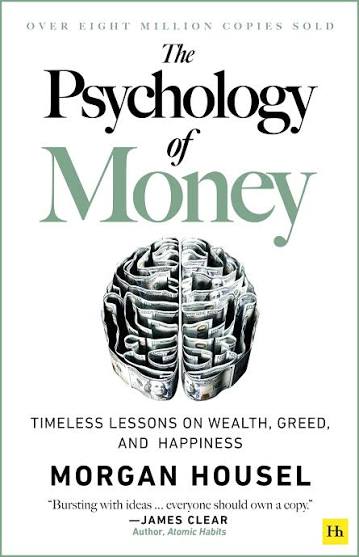
I picked up The Psychology of Money with a specific problem in mind. Not that I was drowning in debt or looking for hot stock tips nothing like that. My issue was simpler and perhaps more irrational: I feel bad when I spend money. Not the normal "I shouldn't have bought that" regret, but a genuine anxiety that lingers long after the purchase. Past experiences had wired me to see spending as loss, saving as security, and the future as something to fear. I wanted to understand why.
This book didn't give me investment advice. It gave me something better: a mirror.
Morgan Housel's central premise is deceptively simple: doing well with money has little to do with how smart you are and everything to do with how you behave. Finance, he argues, is not a hard science like physics or chemistry. It's a soft skill driven by emotions, psychology, and the unique experiences that shape each person's worldview. You can be a genius with a spreadsheet and still make catastrophic decisions. You can be a high school dropout with no financial education and die wealthy. The difference isn't IQ. It's behavior.
The book is structured as 20 short chapters, each built around a single idea. Housel doesn't lecture. He tells stories about janitors who left millions to charity, about investment bankers who lost everything, about the dot-com crash, about the Great Depression. These aren't just illustrations. They're the argument itself.
Lesson 1: No One's Crazy
The first chapter opens with a simple but profound observation: your personal experiences with money make up maybe 0.00000001% of what's happened in the world, but roughly 80% of how you think the world works.
Someone who grew up during the Great Depression thinks about money differently than someone who came of age during the 1990s boom. A person who lived through hyperinflation in Argentina has a fundamentally different relationship with currency than someone born in Switzerland. We all make financial decisions based on our own narrow slice of history, and we judge others for making decisions that would make perfect sense if we'd lived their lives.
This is the first lesson: stop judging. Your way isn't the only way. What looks irrational from the outside is often perfectly rational from the inside.
Lesson 2: Luck and Risk Are Siblings
Nothing is as good or as bad as it seems. Every successful person has benefited from luck they'll never fully acknowledge, and every failure has been touched by risk they couldn't control. Bill Gates got lucky being born at the right time and attending a high school with a computer terminal an almost unimaginable advantage in 1968. Countless other smart, hardworking kids didn't get that break.
The inverse is also true. When someone fails, it's easy to attribute it to bad decisions. But sometimes it's just bad luck. The world is messy. Outcomes are never purely the result of effort. Recognizing this doesn't excuse failure or diminish success. It just keeps you humble.
Lesson 3: The Hardest Financial Skill Is Getting the Goalpost to Stop Moving
This one cut deep.
You set a goal: save $10,000. You hit it. Then you want $50,000. You hit that too. Then $100,000. Then a million. Each time you reach a milestone, the goalpost moves further away. You're climbing a mountain that keeps growing taller.
The danger isn't ambition. The danger is when satisfaction never arrives when the taste of having more increases ambition faster than it increases happiness. You end up wealthy by any objective measure but feeling perpetually behind. The solution is to define what "enough" looks like and to recognize when you've reached it. Enough isn't settling. Enough is knowing that the opposite an insatiable appetite for more will push you to the point of regret.
Lesson 4: Compounding Is a Quiet Miracle
Warren Buffett is one of the greatest investors in history. But his skill isn't the whole story. The real story is time.
Of Buffett's $84.5 billion net worth, $84.2 billion was accumulated after his 65th birthday. He started investing at 10. By the time most people retire, he'd been compounding for 55 years. The extra decades turned good returns into astronomical wealth.
The lesson isn't that you need Buffett's returns. It's that you need his patience. The first rule of compounding: never interrupt it unnecessarily. Small advantages, sustained over long periods, produce results that look like magic. But the magic only works if you stay in the game.
Lesson 5: Getting Wealthy vs. Staying Wealthy
These are two different skills, and they require opposite mindsets.
Getting wealthy takes risk, optimism, and putting yourself out there. Staying wealthy requires the opposite: humility, fear, and the recognition that what you've built can be taken away just as fast as it arrived. Survival is the only thing that matters. Not growth. Not returns. Not beating the market. Survival.
Housel puts it simply: "Good investing is not necessarily about making good decisions. It's about consistently not screwing up." You can be wrong half the time and still do fine as long as your mistakes don't take you out of the game entirely.
Lesson 6: Tails Win Everything
In investing, a small number of events account for the majority of outcomes. This is the "tail" of the distribution.
Buffett has owned hundreds of stocks in his life. He made most of his money on maybe ten of them. The rest ranged from mediocre to complete failures. That's normal. The key isn't avoiding losers. The key is letting your winners run long enough for the tail to do its work.
This applies beyond investing. A few relationships shape your life. A handful of books change how you think. A small number of decisions determine your entire trajectory. The tail wags everything. Act accordingly.
Lesson 7: Freedom Is the Highest Dividend
This is the chapter I've returned to most often.
Housel cites psychological research showing that the strongest predictor of happiness isn't income, possessions, or status. It's control over your time. The ability to wake up and say, "I can do whatever I want today."
Money's greatest value is its ability to buy this control. Not yachts. Not vacations. Not fancy cars. The freedom to walk away from a job you hate. The freedom to spend time with people you love. The freedom to pursue work that matters to you, regardless of the paycheck.
"The highest form of wealth," Housel writes, "is the ability to wake up every morning and say, 'I can do whatever I want today.'" I've thought about that sentence more than any other in the book.
Lesson 8: The Man in the Car Paradox
You see a guy in a Ferrari. You think: wow, if I had that car, people would think I'm cool.
But here's the thing: the guy in the Ferrari isn't thinking about you. He's thinking about himself. He bought the car for his own reasons maybe to feel successful, maybe to reward himself, maybe just because he likes fast cars. Your admiration doesn't register.
The paradox: no one is impressed with your possessions as much as you are. We spend money on status signals, hoping to earn respect from people who are too busy worrying about their own status to notice. It's a game with no winners.
Lesson 9: Wealth Is What You Don't See
This reframed everything for me.
Rich is what you spend. Wealth is what you don't see. The guy in the fancy car might be rich. But the woman in the modest house, quietly investing for thirty years? That's wealth. It's invisible. It doesn't announce itself. It just accumulates, silently, year after year.
The fastest way to stop being wealthy is to try to look rich. Spending money to prove you have money is the surest path to having less of it.
Lesson 10: Savings Rate Matters More Than You Think
Building wealth has surprisingly little to do with your income or investment returns. It has everything to do with your savings rate.
You can't control the market. You can't control your boss. You can't control whether your investments go up or down next year. But you can control how much you spend. You can control the gap between your income and your ego.
Housel puts it bluntly: "Savings = Income - Ego." Cut the ego, and the savings take care of themselves.
Lesson 11: Reasonable > Rational
Finance textbooks teach rational decision-making. Calculate expected values. Optimize for maximum returns. Be logical.
But humans aren't logical. We're emotional, flawed, and inconsistent. And that's okay. A rational strategy you abandon during the first market crash is worthless. A reasonable strategy you stick with for decades is priceless.
If an investment helps you sleep at night, it's a good investment even if it's not mathematically optimal. Being reasonable beats being rational every time.
Lesson 12: Room for Error
The most important part of any plan is planning for the plan not to go according to plan.
Margin of safety Housel calls it "room for error" is the only defense against a world governed by odds, not certainties. It's not pessimistic. It's realistic. It's acknowledging that you will be wrong, that surprises will happen, that things will break. Room for error keeps you in the game when everything goes sideways.
Lesson 13: You'll Change
People are terrible forecasters of their future selves. At 25, you think you know what you'll want at 45. You don't. Goals shift. Priorities change. The career that seemed perfect at 30 feels hollow at 50.
This has huge implications for money. Don't lock yourself into decisions that assume your future self will want exactly what you want today. Leave room to change your mind. Leave room to grow.
Lesson 14: Nothing's Free
Everything has a price. The trick is that not all prices appear on labels.
Market volatility isn't a fine it's an admission fee. The price of higher returns is enduring the stomach-churning drops. The price of building something meaningful is years of unnoticed effort. The price of financial independence is decades of disciplined saving.
You can't get the reward without paying the price. The only question is whether you're willing.
Lesson 15: Pessimism Sounds Smarter
Pessimism is seductive. It sounds sophisticated, intellectual, realistic. Optimism sounds naive.
But the world has gotten better for most people most of the time. Progress happens slowly, too slowly to notice day by day. Setbacks happen fast and grab all the headlines. We're wired to pay attention to the bad, which makes us think things are worse than they are.
The long-term trend is positive. Believing that doesn't make you naive. It makes you realistic about the actual trajectory of human progress.
What I Took Away
I finished The Psychology of Money in two sittings. It's a short book barely 250 pages but it's dense with ideas I'll carry for years. It didn't give me a new investing strategy. It gave me a new way of thinking about what money is actually for.
The most valuable thing I took away is permission: permission to be reasonable instead of rational, to value time over returns, to define my own version of enough. I still feel that anxiety when I spend money. But now I understand it better. And understanding, in this case, is most of the battle.
Final Verdict
9/10 - Not because it's perfect, but because it's useful. Profoundly, personally, practically useful. The kind of book you read in an afternoon and think about for years.