Why This Book
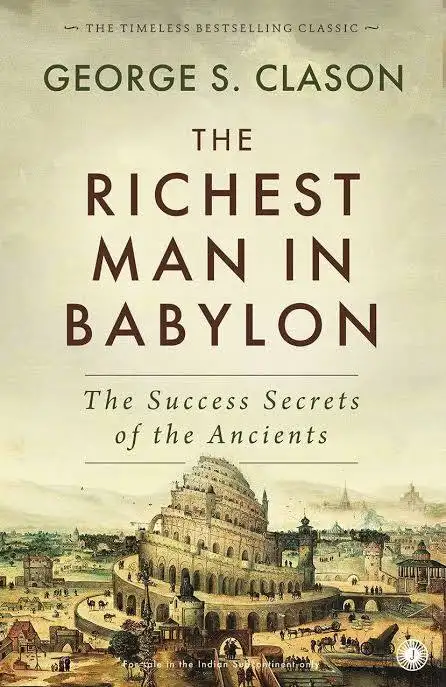
Some books teach through arguments. Others teach through stories. The Richest Man in Babylon takes the second path and walks it so well that nearly a century after its first publication, people are still picking it up, still underlining passages, still passing copies to friends who need a nudge in the right financial direction.
The book is structured as a series of parables set in ancient Babylon, the wealthiest city of its time. Through characters like Arkad (the richest man), Dabasir (a slave who earned his freedom), and Rodan (a spearmaker with more questions than answers), Clason delivers financial wisdom in a form that actually sticks. You remember stories. You forget lectures.
What struck me first is how the book frames money not as an end in itself, but as a tool for dignity, freedom, and the ability to provide for those you love. The Babylonians weren't chasing wealth for status. They wanted it so they could sleep peacefully, so their children could play in clean earth, so they could grow old without fear. That framing matters.
The Seven Cures
The heart of the book is a set of principles delivered as "cures for a lean purse." They're worth listing in full because they build on each other.
1. Start thy purse to fattening
"For every ten coins thou placest within thy purse take out for use but nine." This is the pay yourself first principle in its purest form. Not five percent. Not whatever's left at the end of the month. Ten percent, off the top, before anything else. Arkad tells the story of a young man who started with nothing and built wealth simply by following this rule for years. The magic isn't in the percentage. It's in the consistency.
2. Control thy expenditures
This sounds obvious, but the parable makes it concrete. Arkad asks a student to list everything he spends money on, and they discover together that many expenses could be cut without any loss of happiness. The lesson: budget your remaining ninety percent deliberately, not reactively. The goal isn't to live like a miser. It's to know where your money actually goes.
3. Make thy gold multiply
Saving is the first step, but idle gold doesn't grow. Arkad teaches that every coin should be put to work, earning more coins. The examples are simple loans to merchants and investments in ventures, but the principle is timeless: money should be an employee, not a prisoner.
4. Guard thy treasures from loss
This is the cautionary companion to the previous cure. Not all investments are wise. Not all advisors are competent. Arkad tells of a man who lost everything by trusting a brickmaker's investment advice, and the lesson sticks: seek counsel from those skilled in the matter at hand. A bricklayer knows bricks. A jeweler knows gems. Don't confuse them.
5. Make of thy dwelling a profitable investment
Own your home if you can. The parable makes a simple arithmetic case: rent is money that leaves forever. A mortgage payment eventually becomes an asset. The logic is sound, even if the specifics of homeownership have grown more complicated since 1926.
6. Insure a future income
Plan for the day when you can no longer work. Plan for your family if you're no longer there to provide for them. The specific mechanisms have changed, but the principle hasn't: part of your wealth should be set aside for the future you won't see.
7. Increase thy ability to earn
This is the only cure that focuses on income rather than saving or investing. Arkad argues that the most important investment is in yourself. Learn more. Become more skilled. The more you can do, the more you can earn. This is the only limit on your potential.
The Stories That Stick
The seven cures are the book's skeleton, but the stories are its flesh. A few stayed with me.
The Slave Who Earned His Freedom
Dabasir was a free man who fell into debt, sold himself into slavery to escape his creditors, and eventually earned his way back to freedom through discipline and purpose. His story isn't just about money. It's about the kind of person you have to become to handle money well. You can't save your way to wealth if you're still the person who got into debt in the first place. The change has to be internal first.
The Goddess of Good Luck
This is the most philosophical chapter. A group of men discuss why luck seems to favor some and avoid others. The conclusion: luck rewards action. The goddess only visits those who are already moving toward their goals. You can't win if you're not playing. You can't be lucky if you're not trying. It's a useful corrective to the idea that wealth is mostly about random chance.
The Five Laws of Gold
Near the end, Arkad distills everything into five laws, each illustrated with a miniature story. Gold comes gladly to those who save at least a tenth. Gold works diligently for wise owners. Gold clings to cautious investors. Gold slips away from the inexperienced. Gold flees from those who chase impossible returns. It's a summary that rewards rereading.
What Works
The parable format is the book's greatest strength. These aren't abstract principles delivered from on high. They're struggles you watch characters work through, fail at, and eventually master. When Dabasir describes how he climbed out of debt, you're not just learning about debt repayment. You're watching someone do it, step by step, over years. The emotional arc matters.
The simplicity is also the point. Clason isn't trying to impress you with complexity. He's trying to give you tools you'll actually use. And people do use them. I found myself thinking about Arkad's lessons days later, not because I hadn't heard them before, but because hearing them in story form made them feel real in a way that bullet points never do.
The book is also mercifully short. You can read it in an afternoon. There's no padding, no filler, no chapters that exist just to hit a word count. It says what it needs to say and stops.
What Doesn't
The biblical prose style takes some getting used to. Clason writes in an archaic register meant to evoke ancient Babylon, and it can feel stilted at first. Sentences like "Where the determination is, the way can be found" require a small mental translation. You adjust after a few chapters, but the opening pages require patience.
The lessons are also extremely basic. If you've read any personal finance books before, nothing here will be new. You know you should save ten percent. You know you should live below your means. You know you should invest wisely. The value isn't in novelty. It's in reminder.
Some readers find the repetition grating. The same principles appear across multiple stories, and if you're looking for depth rather than reinforcement, you might feel like you're reading the same chapter over and over. But repetition is also how things stick. I found myself grateful for it by the end.
The investment advice is also pre-modern. There's no discussion of index funds, diversification beyond simple loans, or market volatility. You have to translate the principles into contemporary terms yourself. That's doable, but it requires work.
A Personal Note
I came to this book after reading dozens of other finance books that all trace their lineage back to it. Nothing surprised me. Nothing felt new. And yet.
And yet I found myself marking passages. I found myself thinking about Dabasir's journey when I looked at my own relationship with money. I found myself asking whether I was the kind of person who could handle wealth, or just the kind who wanted it.
The book's oldest lesson might be its most overlooked: getting money and being worthy of it are two different things. The Babylonians believed that gold flows to those who understand its nature and flees from those who don't. That's not mysticism. It's psychology dressed as parable. You can't keep what you don't respect.
Who Should Read It
This is a book for two kinds of people: those who have never thought seriously about money and need a gentle, memorable introduction, and those who have thought about money for years and need a reminder of the basics they keep forgetting. The rest of us? We're in both categories whether we admit it or not.
It's also a book for anyone who learns better through narrative than through bullet points. If you've struggled with dry finance books, try this one. The stories carry the weight.
Final Verdict
8/10 - Not for originality, but for effectiveness. Sometimes the oldest tools are the sharpest. The lessons are simple, the delivery is memorable, and the whole thing takes less time than a movie. You could do worse than reading it once a year.