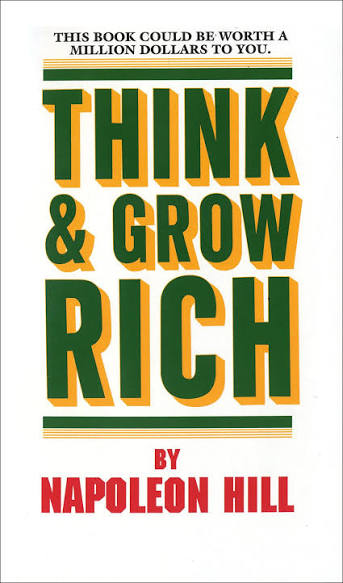
My Journey to This Book
I came to Think and Grow Rich like millions before me: hungry, restless, desperate for a map. It's been called the "granddaddy of all motivational literature." People swear it changed their lives. And for a few weeks, I thought it was changing mine.
It did something, alright. It lit a fire. Then it let me burn.
This review is my attempt to hold both truths at once: the genuine ignition it provided and the crash that followed. The insights that still stick with me and the dangerous omissions that left me stranded. The 8/10 rating reflects the power of the experience, not an endorsement of every word Hill wrote. Ratings are personal. This one is mine.
What the Book Actually Is
Published in 1937, Napoleon Hill's classic claims to distill the success secrets of over 500 wealthy men, including Andrew Carnegie, Henry Ford, and Thomas Edison. The book is built around thirteen principles.
The Thirteen Steps
1. Desire - The starting point of all achievement
2. Faith - Visualizing and believing in the attainment of desire
3. Auto-Suggestion - The medium for influencing the subconscious mind
4. Specialized Knowledge - Personal experiences or observations
5. Imagination - The workshop of the mind
6. Organized Planning - Crystallizing desire into action
7. Decision - The mastery of procrastination
8. Persistence - The sustained effort necessary to induce faith
9. Power of the Master Mind - The driving force
10. The Mystery of Sex Transmutation - Channeling creative energy
11. The Subconscious Mind - The connecting link
12. The Brain - A broadcasting and receiving station for thought
13. The Sixth Sense - The door to the temple of wisdom
The central promise is seductive: if you hold a burning desire in your mind with absolute faith and act on it persistently, you will attract the means to achieve it. Thoughts become things. The universe bends.
What Worked: The Fire
The first time I read it, I couldn't put it down. Something about Hill's relentless certainty bypassed my skepticism and burrowed straight into my ambition. I walked around buzzing, convinced I'd finally found the operating manual I'd been missing.
The Definite Chief Aim
The "Definite Chief Aim" concept genuinely helped. Writing down a specific goal every day did something to my focus. Opportunities I'd previously missed became visible not because the universe rearranged itself, but because my brain started filtering for them. Neuroscience now confirms this: the Reticular Activating System acts as a goal-seeking mechanism. Hill didn't know that term, but he'd stumbled onto something real.
The Master Mind Principle
The "Master Mind" principle also resonated. Surrounding yourself with capable people who share your vision is undeniably powerful. Some of my biggest breakthroughs have come through collaboration, and Hill's emphasis on this as a deliberate practice rather than accidental luck was valuable.
Persistence as a Discipline
Hill's emphasis on persistence, the refusal to quit when things get hard, isn't wrong. It's just incomplete. The idea that success is largely a function of not giving up before the breakthrough is supported by countless biographies of successful people.
For a few weeks, I was the most motivated person I knew. I woke up early. I wrote my goals. I visualized success. I felt like I'd finally grabbed the wheel. The book gave me rocket fuel.
What Didn't: The Crash
Then reality reasserted itself.
The Burnout
I burned out. Not slowly suddenly. The same intensity that had propelled me forward left me hollow when results didn't materialize as quickly as Hill's anecdotes suggested they would. And here's the cruel trick the book plays: when you fail, it's your fault. You didn't desire hard enough. Your faith wavered. You didn't persist.
This logic is circular and vicious. It places the entire burden of systemic failure on the individual. Tell it to the broke nurse saving lives. Tell it to the entrepreneur whose business collapsed in a recession through no fault of her own. Tell it to the millions who followed Hill's formula and still ended up broke.
The "Secret" That Isn't There
I spent weeks wondering what the "secret" was that Hill kept teasing. I thought I was too dumb to get it. I wasn't. There is no secret. The secret is the book's premise, repeated endlessly: burning desire + faith + persistence = success. That's it. There's no punchline. There's no reveal. The constant teasing creates a sense of inadequacy in the reader, implying the fault is yours for not "getting it."
The Repetition
The book is painfully repetitive. Hundreds of pages basically repeating: want something hard enough, believe you'll get it, and you will. That can be "proven" by a handful of cherry-picked names. But we don't hear about the countless millions for whom it didn't work.
The Bizarre Chapters
The "Sex Transmutation" chapter is genuinely strange. Hill's claim that redirecting sexual energy fuels success is biologically dubious and cringe in practice. I tried his "no orgasm for 30 days" challenge and just became irritable and distracted. Modern science suggests the opposite: testosterone peaks post-orgasm, potentially boosting confidence and drive.
The racial overtones in some passages reflect the attitudes of the 1930s and haven't aged well. You have to read with an awareness of when this was written.
The Man Behind the Myth
Then I learned about Napoleon Hill himself, and everything got more complicated.
The Carnegie Story
The Andrew Carnegie story the one where the steel magnate supposedly mentored young Hill and challenged him to spend 20 years studying success is almost certainly fiction. Carnegie's biographer, David Nasaw, conducted extensive research and stated flatly that he "found no evidence of any sort that Carnegie and Hill ever met" or "that the book was authentic." Carnegie's own archives contain no mention of Napoleon Hill.
Hill only started making the claim after Carnegie died in 1919, conveniently removing any possibility of verification.
The Pattern of Exaggeration
His other boasts advising presidents, interviewing hundreds of famous figures are similarly unverified. He claimed to have advised Woodrow Wilson during World War I and helped FDR write his fireside chats. No evidence supports this. Aside from a brief encounter with Thomas Edison in 1923, there are no records of the famous interviews he claimed to have conducted.
The Legal Troubles
Before his success as an author, Hill was charged with mail fraud for a failed lumber company in 1908 (the same year he supposedly met Carnegie). He was later accused of running a scam automobile college in Washington D.C., charged with violating blue sky laws for fraudulently selling shares in his "George Washington Institute of Advertising," and spent time on the run from authorities.
The Ironic Death
The man who wrote the book on getting rich died with very little money. One biographer noted that Hill "knew failure well" despite preaching success. A Gizmodo investigation called him "the most famous conman you've probably never heard of."
This doesn't automatically make his ideas worthless. But it should make you pause. The greatest success story Hill ever sold was his own.
The Honest Take
Think and Grow Rich is not one book. It's a Rorschach test. What you see reflects what you bring.
What It Genuinely Offers
If you're young, directionless, and lacking confidence, it might feel life-changing. It provides rocket fuel. It forces you to ask what you actually want. The "Definite Chief Aim" exercise is genuinely valuable. The emphasis on persistence and faith if you interpret "faith" as belief in yourself, not magical thinking can sustain you through hard times. The Master Mind principle, stripped of mysticism, is just a fancy term for networking and mentorship, which absolutely work.
What It Dangerously Omits
But if you're looking for a practical guide to building wealth investing strategies, business mechanics, risk management this book offers almost nothing. It's a book about psychology dressed as a book about money. Read it as such, and you might extract something useful. Read it literally, as a formula for success, and you're setting yourself up for burnout and self-blame.
The book also completely ignores systemic factors. Luck, privilege, timing, market conditions, and simple randomness play enormous roles in success. Hill's framework has no room for this, which means when you inevitably encounter setbacks, the only place to place blame is yourself.
The 8/10 Question
I gave this book an 8. After everything I've learned, is that too high?
I don't think so. Here's why:
- The book worked on me. It lit a fire, gave me direction, made me believe something was possible. That's not nothing. Most books don't do that.
- The experience was real, even if the aftermath was complicated. The intensity I felt for those weeks mattered. An 8 reflects the impact without endorsing the whole philosophy.
- I'm rating the book I experienced, not the book other people tell me it should be. The guy who calls it a 2-star "email that got stretched into a book" is rating something different than what I read.
My review already captures the complexity the fire and the crash, the genuine insights and the dangerous omissions. An 8 with that context is actually more powerful than a lower rating. It says: "This book did something real to me, and here's why that was both good and bad."
The people who need a 6-star warning label will read my review and see the cracks. The people who need a kick in the ass will feel the fire. Both are served.
Final Thoughts
Think and Grow Rich is a book you have to read with one hand on the wall. It provides genuine psychological tools desire clarification, goal focus, persistence but packages them in a mystical, pseudo-scientific wrapper that can't survive close inspection. Its author was deeply flawed, its origin story is almost certainly fabricated, and its promises are vastly oversold.
And yet. And yet it lit a fire under me that nothing else had. And yet I still use the goal-setting exercises. And yet I still think about the Master Mind principle when I'm choosing who to work with.
The book's greatest lesson might be its most unintentional: you can take valuable things from deeply imperfect sources. Hill himself was a walking contradiction a man who preached success and died broke, who claimed divine inspiration and ran scams, who sold certainty while living chaos. That doesn't make his book worthless. It makes it human.
Read it if you need a kickstart. Read it with skepticism. Read it knowing the man behind it was complicated. But don't expect it to deliver what it promises. The secret isn't there. The secret was never there. The secret is that you have to figure it out yourself, and no book no matter how many millions have bought it can do that for you.
Final Verdict
8/10 - Not because it's true, but because it's powerful. Not because Hill was right, but because he lit a fire that still burns. Read it. Take what works. Leave the rest. And don't blame yourself when the universe doesn't bend quite the way he promised.