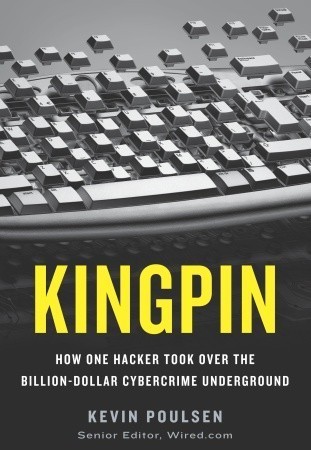
The Man at the Center
Some books tell you a story. Kingpin drops you inside a world you didn't know existed, introduces you to people you won't forget, and then lingers in your mind long after it's over.
At its center is Max Butler, aka "Iceman" - a hacker of almost frightening intelligence. A genius, plain and simple. And reading about his life, I felt something unexpected: envy. Not for the crime, the paranoia, or the prison sentence. But for the obsession. Max found his thing. He found an intellectual challenge so deep, so all-consuming, that it gave his life structure and meaning. He was willing to burn everything - his freedom, his relationships, his comfortable life as a white-hat consultant - for the thrill of the hack, for the puzzle, for the chance to build something better than anyone else. I rooted for him all the way, and Poulsen makes it easy to understand why.
The World Beneath the Surface
The carder underground that Poulsen reveals is staggering. It's not just a few guys in basements stealing credit cards. It's a full-blown economy with forums, marketplaces, ratings systems, disputes, alliances, and betrayals. There's hierarchy - the carders who steal the data, the cashers who turn it into goods, the forum admins who take their cuts and play kingmaker. Reading it felt like watching someone pull back the curtain on a parallel society operating right beneath the surface of normal life. You'll never look at a credit card swipe the same way again.
The Scale of It
Millions of dollars. Hundreds of thousands of stolen cards. Operations spanning continents. The book makes you feel the sheer mass of this hidden economy, and how effortlessly it flowed around traditional law enforcement for years.
The Supporting Cast
Max is the lead, but the supporting players are just as memorable. The rival hackers who run competing forums, constantly hacking each other while claiming to run legitimate businesses. The Eastern European crews who operate with a viciousness the American carders can't match. The informants - always the informants - who flip the moment things get serious, creating a fog of paranoia where nobody can be sure who's really FBI. Poulsen populates this world with people who feel real because they are, and their stories weave together into something bigger than any single character.
The Paranoia
One of the most striking threads running through the book is the constant uncertainty. Every alliance could be a setup. Every new member could be an undercover agent. The hackers spend as much energy suspecting each other as they do stealing cards, and Poulsen captures that tension perfectly.
The Other Side of the Game
The FBI agent on Max's trail, Keith Mularski, is just as compelling as any hacker. He's not a genius coder, but he's patient, methodical, and playing the long game from the inside. His infiltration of the DarkMarket forum is a masterclass in undercover work - earning trust over years, becoming a respected figure in the very community he's dismantling. The cat-and-mouse between Max's ego and the law's persistence gives the second half of the book its tension. I enjoyed watching Mularski work just as much as I enjoyed watching Max scheme.
A Snapshot of an Era
This isn't just a crime story. It's a document of a specific moment in history - the early 2000s, when the internet had matured enough to enable global crime but security hadn't caught up. The book captures how law enforcement learned to fight back, slowly, methodically. It also captures the arrogance of the early hacking scene, the belief that the rules didn't apply, that the digital world was beyond the reach of consequence.
The Evolution
You watch both sides evolve. The hackers get smarter, more organized, more paranoid. The feds get more sophisticated, more patient, more willing to play the long game. It's an arms race playing out in real time, and Poulsen has a front-row seat.
The Aftermath
The ending isn't Hollywood. There's no dramatic chase, no final showdown. Max gets caught the way most criminals eventually do - through persistence, informants, and his own overconfidence. But what hit me was what came next. The book follows the aftermath: the trials, the sentences, the lives destroyed or permanently altered. Some of these people got out and tried to rebuild. Others didn't. And the underground? It didn't die. It evolved. New forums replaced the old ones. New hackers filled the vacuum. The game keeps going.
The Waste
Days after finishing, I kept thinking about the sheer waste. Not just of money, but of talent. Max and others at his level could have built anything. They chose to build this. And yet - and this is where the book gets complicated - I understood why. The intellectual pull, the challenge, the belonging to something that felt important. Poulsen doesn't moralize. He just shows you the world as it is, and lets you sit with your own reactions.
What Lingers
Kingpin is more than a true-crime thriller. It's a portrait of an era, a deep dive into a hidden culture, and a meditation on intelligence, obsession, and choice. It made me wish, just for a moment, that I could be that consumed by something. And that's a strange, powerful feeling to take away from a book about crime and its consequences.
Final Verdict
9/10 - Read it for Max. Stay for everyone else. And don't expect to shake it off easily.